Why You Need to Track Brand Mentions in AI Search
Here’s a number that should get your attention: AI-driven search traffic grew over 500% in 2025. ChatGPT, Perplexity, Google AI Overviews, Claude, and Gemini are now answering billions of queries — and either recommending your brand, or recommending your competitors instead.
The problem? Unlike traditional SEO where you can check your Google rankings in seconds, most brands have zero visibility into how AI platforms talk about them. You might be getting mentioned in thousands of ChatGPT conversations right now. Or you might be completely invisible. Without tracking, you simply don’t know.
This guide covers everything you need to monitor, measure, and improve your brand’s presence across every major AI search platform in 2025.
How AI Search Mentions Work (And Why They’re Different From Google Rankings)
Traditional search gives you a fixed list of 10 blue links. Your position is measurable, consistent, and relatively stable day-to-day. AI search is fundamentally different.
When someone asks ChatGPT “What’s the best AI SEO agency?” — the response is generated dynamically. It pulls from the model’s training data, real-time web access (if enabled), and contextual reasoning. The same question asked twice might produce different brand recommendations depending on how it’s phrased, what context surrounds it, and which model version is running.
This means tracking AI brand mentions requires a completely different approach than traditional rank tracking. You need to monitor multiple AI platforms simultaneously, test various prompt phrasings, and track trends over time rather than fixed positions.
The 7 Best AI Brand Mention Tracking Tools in 2025
1. Otterly.ai — Best Overall AI Visibility Tracker
Otterly specializes exclusively in AI search monitoring. It automatically sends queries to ChatGPT, Perplexity, Google AI Overviews, and AI Mode, then analyzes responses for brand mentions, citations, and source links. The platform tracks visibility scores over time, letting you see whether your AI presence is growing or declining.
2. Superprompt.com — Best for Comprehensive AI Rank Tracking
Superprompt positions itself as the industry-leading AI search rank tracking platform. It monitors brand visibility across ChatGPT, Perplexity, Claude, and other major AI platforms. Their reporting dashboard makes it easy to see which prompts trigger your brand mentions and which don’t — critical intelligence for optimizing your generative engine optimization strategy.
3. Finseo.ai — Best for Multi-Platform Sentiment Analysis
Finseo goes beyond simple mention tracking by analyzing visibility, mentions, and sentiment simultaneously. It monitors ChatGPT, Claude, Perplexity, and Gemini, and shows how AI recommendations vary by region and language.
4. Frase.io AI Tracking — Best for Content Teams
Frase is already well-known for content optimization, but their AI tracking feature is increasingly powerful. It tracks brand visibility across ChatGPT, Claude, Gemini, and Perplexity, discovers which prompts mention your brand, and analyzes competitor positioning.
5. SE Ranking AI Search Toolkit — Best for SEO Professionals
SE Ranking added a dedicated Perplexity visibility tracker and AI search toolkit to their established SEO platform. They track mentions, links, and competitive positioning across Google AI Overviews and Perplexity.
6. Brand24 — Best for Real-Time AI Mention Alerts
Brand24 is a broader social listening tool that now includes AI-generated content monitoring. Best for brands that need mention tracking across both traditional media and AI platforms.
7. Manual Prompt Testing — The Free (But Time-Consuming) Option
Before investing in paid tools, you can do basic AI mention tracking manually. Open ChatGPT, Perplexity, Claude, and Gemini, and type in your top 20 target queries. Document which platforms mention your brand, how prominently, and what context surrounds the mention. Do this weekly and you’ll have a baseline dataset.
What Metrics to Track for AI Search Visibility
Not all AI mentions are created equal. Here are the key metrics that actually correlate with business impact:
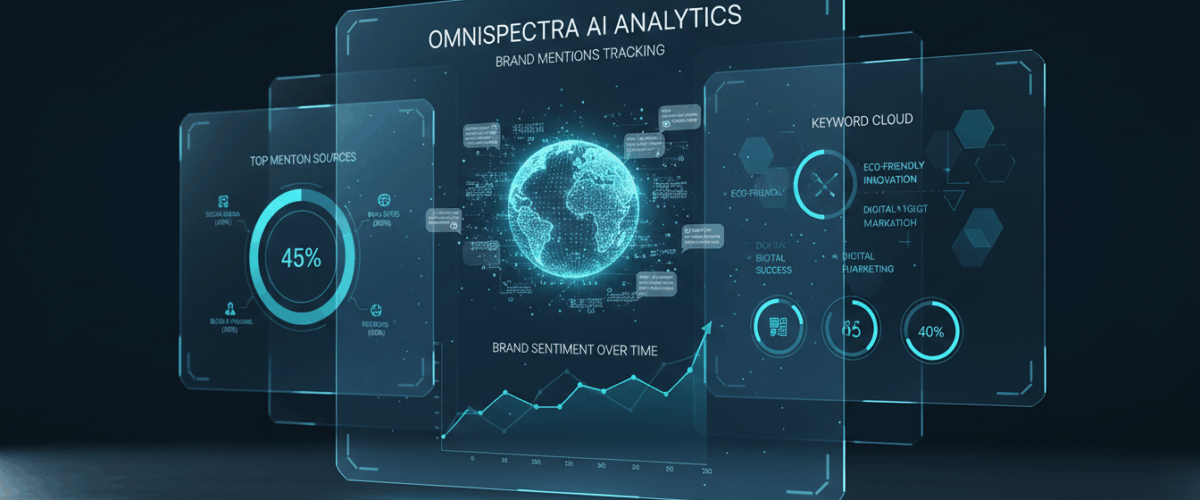
Mention Frequency measures how often your brand appears across AI responses for your target queries. Track this weekly. A rising mention frequency means your AI search ranking factors are improving.
Mention Position tracks where in the response your brand appears. Being the first recommendation carries significantly more weight than being listed fifth.
Sentiment Context monitors whether AI platforms describe your brand positively, neutrally, or with caveats.
Citation Rate measures how often AI platforms link to your actual website when mentioning you. Perplexity is especially important here since it consistently provides source links.
Competitor Share of Voice compares your AI mention frequency against key competitors for the same queries.
How to Improve Your AI Search Mentions (Based on What Tracking Reveals)
Tracking without action is just expensive curiosity. Here’s how to translate monitoring data into actual visibility improvements:
When you’re not mentioned at all: This usually means AI models don’t have enough authoritative content about your brand to reference. The fix is building topical authority through comprehensive content, earning quality backlinks, and ensuring your brand appears on authoritative third-party sources. Our guide to appearing in AI search results covers this in detail.
When you’re mentioned but positioned poorly: Focus on getting featured in industry roundups, earning editorial mentions in publications that AI models weight heavily, and creating the definitive resource for your core topics.
When your sentiment is mixed or negative: AI models reflect what’s written about you across the web. Address the root cause, not just the AI output.
When competitors dominate your target queries: Analyze exactly what they’re doing differently. Use technical AI SEO best practices to close the gap systematically.
Setting Up Your AI Mention Tracking Dashboard
Here is a practical framework for getting started with AI brand monitoring this week:
Step 1: Define your target query list. Write down 20-30 questions your ideal customers might ask AI platforms.
Step 2: Establish your baseline. Run every query through ChatGPT, Perplexity, Claude, and Gemini. Document your current mention rate, position, and sentiment.
Step 3: Choose your tracking tool. For most businesses, one dedicated AI tracking tool combined with manual spot-checks gives the best balance of automation and accuracy.
Step 4: Set up weekly reporting. Track mention frequency, position, sentiment, and citation rate weekly.
Step 5: Connect tracking to action. Every monitoring report should generate specific action items.
The Bottom Line: You Cannot Optimize What You Do Not Measure
AI search visibility is becoming as important as Google rankings. Brands that start tracking and optimizing their AI presence now will compound their advantage as AI search continues to grow.
The good news: the AI SEO space is still early enough that consistent effort creates outsized results. Most of your competitors are not monitoring their AI visibility at all. Start tracking today, and you are already ahead.
Need help building an AI search optimization strategy that actually moves the needle? See our guide to the best AI SEO agencies or get in touch with our team.