Technical AI SEO: Schema Markup, Structured Data & Content Architecture
Published by Be The Answer — Your AI SEO Agency We cover this extensively in our how AI search engines rank content.
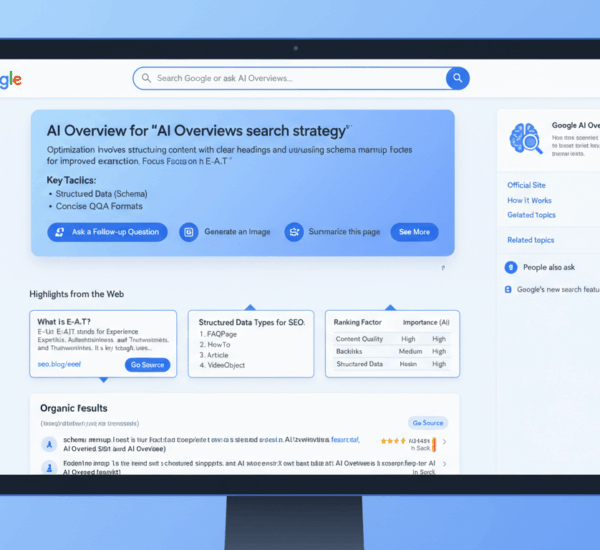
Traditional technical SEO focused on helping Google’s crawlers index your pages. Today, a new generation of AI-powered search engines — ChatGPT, Perplexity, Google AI Overviews, and Claude — are reshaping how information gets discovered, synthesized, and presented to users. Technical SEO for AI isn’t optional anymore. It’s the foundation that determines whether your content gets cited by large language models or gets ignored entirely.
In this guide, we break down the technical building blocks: schema markup for AI search, structured data AI SEO best practices, LLM content structure, and the architectural decisions that make your site machine-readable at every level. Whether you’re an SEO professional, a developer, or a marketing leader, you’ll walk away with concrete implementation steps you can deploy this week.
Why Technical SEO Matters More Than Ever for AI Search
Large language models don’t “browse” websites the way humans do. They rely on crawlers (like GPTBot, Google-Extended, and PerplexityBot) that fetch, parse, and index content at scale. The cleaner your technical foundation, the more accurately AI systems understand — and cite — your content.
Here’s what’s changed:
- AI systems extract meaning, not just keywords. Schema markup and structured data give AI explicit semantic context — the difference between guessing your content’s meaning and knowing it.
- Zero-click answers are the new ranking. AI Overviews and chat-based search engines pull answers directly from source material. If your content isn’t structured for extraction, you won’t be the answer.
- Crawl efficiency matters more. AI crawlers are aggressive but selective. Poor technical health — slow load times, broken structured data, thin pages — means wasted crawl budget and missed indexing opportunities.
- Entity understanding drives citations. LLMs build internal knowledge graphs. Schema markup that clearly defines entities (your brand, your authors, your products) helps AI systems attribute information correctly.
The bottom line: technical SEO for AI is about making your content maximally parseable, semantically rich, and architecturally sound so that AI systems treat your site as a trusted, authoritative source.
Schema Types That Help AI Crawlers Understand Your Content
Not all schema markup is created equal when it comes to AI search. While there are hundreds of schema.org types, certain ones have outsized impact on how AI crawlers interpret and prioritize your content.
Article & BlogPosting Schema
This is foundational for any content-driven site. Article schema tells AI systems exactly what your content is about, who wrote it, when it was published, and how it relates to your broader site.
<script type="application/ld+json">
{
  "@context": "https://schema.org",
  "@type": "BlogPosting",
  "headline": "Technical AI SEO: Schema Markup, Structured Data & Content Architecture",
  "description": "A comprehensive guide to schema markup for AI search, structured data implementation, and content architecture for LLMs.",
  "author": {
    "@type": "Organization",
    "name": "Be The Answer",
    "url": "https://betheanswer.online"
  },
  "publisher": {
    "@type": "Organization",
    "name": "Be The Answer",
    "url": "https://betheanswer.online",
    "logo": {
      "@type": "ImageObject",
      "url": "https://betheanswer.online/logo.png"
    }
  },
  "datePublished": "2026-02-14",
  "dateModified": "2026-02-14",
  "mainEntityOfPage": {
    "@type": "WebPage",
    "@id": "https://betheanswer.online/blog/technical-ai-seo-schema-markup/"
  },
  "keywords": ["schema markup for ai search", "structured data ai seo", "technical seo for ai", "llm content structure"]
}
</script>
Why it matters for AI: BlogPosting schema with a clearly defined author and publisher helps LLMs build entity associations. When an AI system encounters your schema alongside high-quality content, it strengthens the connection between your brand and the topic — making future citations more likely.
FAQPage Schema
FAQ schema is one of the most powerful tools for AI SEO. LLMs are fundamentally question-answering machines. When your content is explicitly structured as questions and answers, you’re speaking their language.
<script type="application/ld+json">
{
  "@context": "https://schema.org",
  "@type": "FAQPage",
  "mainEntity": [
    {
      "@type": "Question",
      "name": "What is schema markup for AI search?",
      "acceptedAnswer": {
        "@type": "Answer",
        "text": "Schema markup for AI search is structured data added to web pages that helps AI crawlers and large language models understand your content's meaning, context, and relationships. It uses the schema.org vocabulary to provide explicit semantic signals beyond what plain text offers."
      }
    },
    {
      "@type": "Question",
      "name": "Does structured data affect AI search rankings?",
      "acceptedAnswer": {
        "@type": "Answer",
        "text": "While AI search engines don't have traditional rankings, structured data significantly impacts whether your content gets cited in AI-generated responses. Clean structured data helps AI systems understand, trust, and accurately attribute your content."
      }
    }
  ]
}
</script>
HowTo Schema
For instructional content, HowTo schema breaks processes into discrete, machine-readable steps. AI systems love this because it maps directly to how they generate step-by-step answers.
Organization & LocalBusiness Schema
Entity-level schema helps AI systems understand who you are, not just what you publish. This is critical for brand mentions, knowledge panel equivalents in AI search, and establishing topical authority.
<script type="application/ld+json">
{
  "@context": "https://schema.org",
  "@type": "Organization",
  "name": "Be The Answer",
  "url": "https://betheanswer.online",
  "description": "AI SEO agency helping businesses get cited by ChatGPT, Perplexity, and AI search engines.",
  "sameAs": [
    "https://twitter.com/betheanswer",
    "https://linkedin.com/company/betheanswer"
  ],
  "knowsAbout": [
    "AI SEO",
    "Schema Markup",
    "Structured Data",
    "Large Language Model Optimization",
    "Content Architecture"
  ]
}
</script>
Pro tip: The knowsAbout property is underused but powerful. It explicitly tells AI systems what topics your organization has expertise in — directly feeding topical authority signals.
Speakable Schema
As voice-based AI assistants grow, Speakable schema identifies which sections of your content are best suited for text-to-speech. This positions your content for voice search and AI assistant responses.
Implementing Structured Data: A Practical Guide
Knowing which schema types to use is step one. Implementing them correctly — so AI crawlers actually benefit — is where most sites fall short.
JSON-LD: The Preferred Format
Always use JSON-LD (JavaScript Object Notation for Linked Data) for your structured data. It’s Google’s recommended format, it’s the easiest for AI crawlers to parse, and it doesn’t require changes to your HTML markup.
Place JSON-LD blocks in the <head> of your pages or just before the closing </body> tag. For WordPress sites, use a plugin like Rank Math, Yoast, or Schema Pro — but always validate the output manually. For more on this topic, read our B2B AI SEO guide.
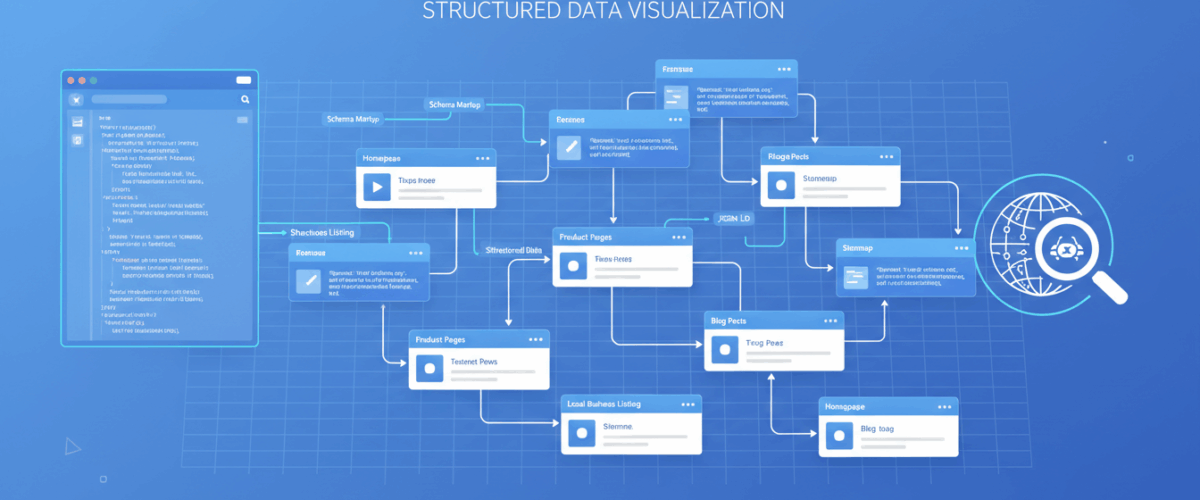
Nesting and Linking Entities
Don’t treat each schema block as isolated. The real power of structured data AI SEO comes from connecting entities across your schema:
<script type="application/ld+json">
{
  "@context": "https://schema.org",
  "@type": "BlogPosting",
  "headline": "Your Article Title",
  "author": {
    "@type": "Person",
    "name": "Jane Smith",
    "@id": "https://betheanswer.online/team/jane-smith",
    "jobTitle": "Head of AI SEO Strategy",
    "worksFor": {
      "@type": "Organization",
      "name": "Be The Answer",
      "@id": "https://betheanswer.online/#organization"
    }
  },
  "about": [
    {
      "@type": "Thing",
      "name": "Schema Markup",
      "sameAs": "https://en.wikipedia.org/wiki/Schema.org"
    },
    {
      "@type": "Thing",
      "name": "AI Search Engine Optimization",
      "sameAs": "https://en.wikipedia.org/wiki/Search_engine_optimization"
    }
  ]
}
</script>
The @id property creates persistent entity identifiers that AI systems can track across your entire site. The about property with sameAs links to authoritative sources (like Wikipedia) helps AI systems disambiguate your topics.
Validation and Testing
Before deploying, validate your structured data with:
- Google’s Rich Results Test — confirms schema is valid and eligible for rich results
- Schema.org Validator — checks compliance with the full schema.org specification
- Manual JSON-LD inspection — review the raw output in your browser’s DevTools (Elements panel, search for
application/ld+json)
Common mistakes to avoid: missing required properties, incorrect nesting, duplicate schema blocks that conflict, and using Microdata or RDFa when JSON-LD would be cleaner.
Content Architecture for LLMs: Structuring Pages AI Can Parse
Beyond schema markup, the way you structure your actual content has a massive impact on AI discoverability. LLM content structure is about organizing information so AI systems can extract, chunk, and cite it efficiently.
The Hierarchy Principle: H1 → H2 → H3
AI crawlers use heading hierarchy to understand content relationships. Your heading structure should function like a table of contents that tells the complete story of the page:
- H1: One per page. States the primary topic clearly.
- H2: Major subtopics. Each should be a standalone concept that could answer a distinct query.
- H3: Supporting details under each H2. These often map to specific questions users (and AI systems) ask.
Each H2 section should be self-contained enough that an AI system could extract it as a standalone answer. This is how AI Overviews and Perplexity pull “snippet-style” responses — they grab coherent sections, not scattered sentences.
Front-Load Key Information
LLMs weight the beginning of sections more heavily during extraction. Put the direct answer or core claim in the first 1-2 sentences of each section, then expand with evidence, examples, and nuance.
Think of it as the inverted pyramid from journalism — but applied to every section, not just the article intro.
Use Definition Patterns
When introducing concepts, use explicit definition structures that AI systems can reliably extract:
- “X is…” — “Schema markup for AI search is structured data that helps AI crawlers understand content semantics.”
- “X refers to…” — “LLM content structure refers to the organizational patterns that make web content parseable by large language models.”
These patterns are exactly how LLMs build their internal definitions. When your content uses them, you’re more likely to be the source they cite.
Lists, Tables, and Structured Formats
AI systems extract information from structured HTML elements more reliably than from prose paragraphs. Use:
- Ordered lists for processes and rankings
- Unordered lists for features, benefits, and options
- Tables for comparisons and specifications
- Code blocks for technical implementations
Each of these formats gives AI crawlers clean extraction points — discrete chunks of information that can be cited directly in AI-generated responses.
FAQ Optimization: Speaking the Language of AI
FAQ sections are disproportionately powerful for AI SEO. Here’s how to optimize them:
Write Questions the Way Users Ask Them
Use natural language questions, not keyword-stuffed headings. AI systems match user queries to content — the closer your questions mirror real search patterns, the more likely you’ll be cited.
Use tools like AlsoAsked, AnswerThePublic, or Google’s “People Also Ask” to find the actual questions your audience is typing into search and AI interfaces.
Keep Answers Concise but Complete
The ideal FAQ answer for AI citation is 40-60 words: long enough to be a complete answer, short enough to be extracted as a single chunk. Follow up with expanded detail if needed, but lead with the direct answer. For more on this topic, read our generative engine optimization guide.
Pair FAQ Content with FAQPage Schema
Always implement FAQPage schema alongside your visible FAQ content. This gives AI systems two signals: the semantic HTML structure and the explicit schema markup. Double-signal content gets prioritized.
Internal Linking Architecture for AI Discovery
Internal linking isn’t just about passing PageRank anymore. For AI systems, your internal link structure communicates topical relationships, content hierarchy, and entity associations.
Hub-and-Spoke Content Models
Organize your content into topical clusters: a comprehensive pillar page (hub) linked to detailed supporting articles (spokes). This mirrors how AI systems build topic graphs:
- Pillar page: Broad overview of a topic (e.g., “The Complete Guide to AI SEO”)
- Spoke pages: Deep dives into subtopics (e.g., “Schema Markup for AI Search,” “Content Strategy for LLMs”)
- Cross-links: Spokes link to each other where contextually relevant
This architecture signals to AI crawlers that your site has comprehensive, interconnected expertise on a topic — a key factor in topical authority.
Descriptive Anchor Text
Use anchor text that describes the destination page’s topic, not generic phrases like “click here” or “learn more.” AI crawlers use anchor text to understand the relationship between linked pages. Descriptive anchors strengthen the semantic connections in your site’s knowledge graph.
Breadcrumb Schema for Hierarchy
Implement BreadcrumbList schema to make your site hierarchy explicit:
<script type="application/ld+json">
{
  "@context": "https://schema.org",
  "@type": "BreadcrumbList",
  "itemListElement": [
    {
      "@type": "ListItem",
      "position": 1,
      "name": "Home",
      "item": "https://betheanswer.online/"
    },
    {
      "@type": "ListItem",
      "position": 2,
      "name": "Blog",
      "item": "https://betheanswer.online/blog/"
    },
    {
      "@type": "ListItem",
      "position": 3,
      "name": "Technical AI SEO: Schema Markup & Structured Data",
      "item": "https://betheanswer.online/blog/technical-ai-seo-schema-markup/"
    }
  ]
}
</script>
Site Speed and Technical Performance for AI Crawlers
AI crawlers are aggressive. GPTBot, for instance, can send thousands of requests in short bursts. If your server can’t handle the load, you lose crawl opportunities — and citations.
Core Performance Priorities
- Server response time under 200ms. AI crawlers have timeout thresholds. Slow responses mean incomplete crawls.
- Clean HTML delivery. Minimize JavaScript-rendered content. AI crawlers primarily parse server-side HTML. If your content requires JavaScript execution to render, many AI crawlers will miss it entirely.
- Efficient robots.txt configuration. Allow AI crawlers (GPTBot, PerplexityBot, Google-Extended, Anthropic’s ClaudeBot) access to your content while blocking low-value pages (admin, cart, staging).
- XML sitemaps with lastmod dates. AI crawlers use sitemaps to prioritize crawling. Accurate
lastmoddates signal freshness and help crawlers focus on your most current content. - CDN and caching. Use a CDN to handle crawl bursts without server strain. Set appropriate cache headers so repeat crawls are fast and efficient.
Robots.txt for AI Crawlers
Here’s a recommended robots.txt configuration that welcomes AI crawlers while maintaining control:
# AI Search Crawlers - Allow
User-agent: GPTBot
Allow: /blog/
Allow: /services/
Disallow: /admin/
Disallow: /cart/

User-agent: PerplexityBot
Allow: /

User-agent: ClaudeBot
Allow: /

User-agent: Google-Extended
Allow: /

# Standard crawlers
User-agent: *
Allow: /

Sitemap: https://betheanswer.online/sitemap.xml
Monitoring and Testing Your AI SEO Technical Foundation
Implementing technical AI SEO is not a one-time task. You need ongoing monitoring to ensure your structured data stays valid, your content remains crawlable, and your schema evolves with AI search requirements.
Key Monitoring Activities
- Log file analysis: Monitor server logs for AI crawler activity. Track GPTBot, PerplexityBot, and ClaudeBot visits to understand what they’re crawling and how often.
- Schema validation audits: Run monthly checks with Google’s Rich Results Test and Schema.org Validator to catch schema errors before they impact visibility.
- AI citation tracking: Use tools to monitor when and where AI systems cite your content. Track brand mentions across ChatGPT, Perplexity, and Google AI Overviews.
- Content freshness signals: Update
dateModifiedin your schema when you revise content. AI systems factor freshness into citation decisions. - Structured data coverage: Audit your site to ensure all key pages have appropriate schema markup — not just your homepage or top posts.
Testing AI Readability
A simple but effective test: paste your page’s URL into ChatGPT, Perplexity, or Claude and ask specific questions about the content. If the AI can accurately answer questions using your content, your technical foundation is working. If it can’t, you have optimization opportunities.
Frequently Asked Questions
What is schema markup for AI search?
Schema markup for AI search is structured data added to your web pages using the schema.org vocabulary that helps AI crawlers and large language models understand your content’s meaning, relationships, and context. It provides explicit semantic signals that go beyond what plain text offers, making your content more likely to be accurately interpreted and cited by AI search engines like ChatGPT, Perplexity, and Google AI Overviews.
Does structured data directly affect AI search visibility?
Yes. While AI search engines don’t use traditional ranking algorithms, structured data significantly impacts whether your content gets cited in AI-generated responses. Clean, comprehensive structured data helps AI systems understand your content’s topic, verify your authority, and accurately attribute information — all of which increase your chances of being referenced.
📚 Continue Reading
What’s the most important schema type for AI SEO?
FAQPage and Article/BlogPosting schema are the highest-impact types for AI SEO. FAQPage schema is especially powerful because it directly mirrors how LLMs process information — as question-answer pairs. Article schema establishes authorship, publication context, and topical relevance, which feed into AI authority signals.
How should I structure content for LLMs to understand it?
Structure content with clear heading hierarchies (H1 → H2 → H3), front-load key information in each section, use explicit definition patterns (“X is…”), and leverage structured HTML elements like lists and tables. Each H2 section should be self-contained enough to serve as a standalone answer that an AI system could extract and cite.
Do AI crawlers need to be allowed in robots.txt?
Yes. AI crawlers like GPTBot (OpenAI), PerplexityBot, ClaudeBot (Anthropic), and Google-Extended respect robots.txt directives. If you block them, your content won’t be crawled or indexed for AI search. Review your robots.txt to ensure these user agents have access to your valuable content pages.
How often should I audit my structured data?
Conduct structured data audits monthly at minimum. Check for validation errors, missing schema on key pages, outdated information (especially dates), and alignment with your current content. Additionally, monitor server logs for AI crawler behavior to ensure your pages are actually being fetched and processed.
Can Be The Answer help with technical AI SEO implementation?
Absolutely. At Be The Answer, technical AI SEO is core to our service. We audit your existing structured data, implement comprehensive schema markup, optimize your content architecture for LLMs, and provide ongoing monitoring to ensure your site maintains maximum visibility across AI search engines. Get in touch to discuss your technical AI SEO needs.
Your Technical Foundation Is Your AI Advantage
AI search is not a future trend — it’s the present reality. Every day, millions of queries are answered by AI systems that pull from indexed web content. The sites that get cited are the ones with clean technical foundations: proper schema markup, well-structured content, logical site architecture, and fast, reliable performance.
Schema markup for AI search gives machines the semantic context they need. LLM content structure makes your pages extractable and citable. Internal linking builds the topical authority that AI systems use to determine credibility. And consistent monitoring ensures you stay visible as AI search evolves.
The opportunity is real and it’s available right now. Every improvement you make to your technical AI SEO foundation compounds over time — building a moat that competitors without structured data simply can’t cross.
Ready to build your technical AI SEO foundation? Be The Answer specializes in making businesses visible to AI search engines. From schema markup implementation to full content architecture optimization, we help you become the source AI systems trust. Let’s talk.