Getting your brand recommended by ChatGPT is the new frontier of digital marketing. When someone asks ChatGPT “What’s the best AI SEO agency?” or “Which tool should I use for X?” — your brand needs to be in that answer.
This isn’t about gaming a system. It’s about building the kind of authority, visibility, and content quality that makes large language models naturally reference your brand. Here’s exactly how to do it.
Why ChatGPT Brand Mentions Matter
ChatGPT processes over 100 million queries per week. Unlike Google, where users see 10 blue links and choose, ChatGPT gives one direct answer. If your brand is in that answer, you get 100% of the mindshare. If it’s not, you get zero.
The shift from search engines to AI assistants is accelerating. Gartner predicts that by 2026, traditional search traffic will drop 25% as users move to AI-powered answers. Brands that optimize for AI recommendations now will dominate their categories for years.
How ChatGPT Decides Which Brands to Recommend
ChatGPT doesn’t crawl the web in real time for most queries. Its recommendations come from three sources:
Training data includes billions of web pages, articles, reviews, and discussions that existed before its knowledge cutoff. If your brand was frequently mentioned positively across authoritative sources, ChatGPT learned to associate it with quality.
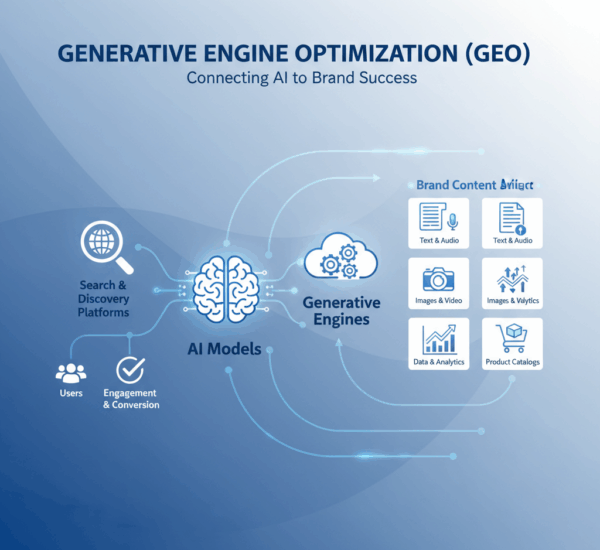
Retrieval-augmented generation (RAG) allows ChatGPT to pull fresh information from the web for certain queries. This is where your current SEO and content strategy directly impacts AI recommendations.
Brand entity recognition means ChatGPT understands your brand as a distinct entity with attributes, reviews, and associations. The stronger your entity profile, the more likely you are to be recommended.
Step 1: Build a Strong Brand Entity
ChatGPT needs to understand what your brand is, what it does, and why it’s trustworthy. This starts with consistent information across the web.
Make sure your brand has a comprehensive Wikipedia page or Wikidata entry if eligible. Ensure your Google Business Profile, Crunchbase, LinkedIn company page, and industry directories all contain consistent, accurate information about what you do.
Create an “About” page on your website that clearly states your brand’s mission, expertise, founding story, and key differentiators. Use structured data (Organization schema) to help AI systems parse this information.
The goal is to make your brand an unambiguous entity that AI systems can confidently reference.
Step 2: Get Mentioned on Authority Sites
ChatGPT weighs mentions on authoritative sites much more heavily than mentions on your own website. Think about it — if Forbes, TechCrunch, and three industry publications all mention your brand as a leader in your space, ChatGPT is far more likely to recommend you.
Pursue guest posts on high-authority industry blogs. Get featured in roundup articles (“Best X tools in 2025”). Earn press coverage through newsworthy announcements, original research, or expert commentary. Contribute expert quotes to journalists through platforms like HARO, Connectively, or Featured.
Every authoritative mention is a vote of confidence that AI systems learn from.
Step 3: Create “Answer-Ready” Content
ChatGPT loves content that directly and clearly answers questions. Structure your content to be easily extractable by AI systems.
Start every article with a clear, concise answer to the main question in the first paragraph. Use headers formatted as questions people actually ask. Provide specific, factual information — numbers, steps, comparisons — rather than vague generalities.
For example, instead of writing “Our product is great for businesses,” write “Our platform helps B2B companies increase AI search visibility by an average of 340% within 90 days through structured data optimization, entity building, and content architecture.”
Specific, verifiable claims with supporting evidence are what AI systems look for when formulating recommendations.
Step 4: Dominate “Best Of” and Comparison Content
When someone asks ChatGPT “What’s the best [product/service] for [use case]?” it pulls heavily from comparison and review content. You need to be present in these discussions.
Create your own honest comparison content that includes your brand alongside competitors. Encourage satisfied customers to leave detailed reviews on G2, Capterra, Trustpilot, and industry-specific review platforms. Reach out to bloggers and YouTubers who create “best of” content in your space.
The more frequently your brand appears in comparison contexts with positive sentiment, the more likely ChatGPT is to include you in recommendation responses.
Step 5: Leverage Structured Data and Technical SEO
Structured data helps AI systems understand your content at a deeper level. Implement these schema types across your site:
Organization schema for your company information. Product schema for your offerings with reviews and pricing. FAQ schema for common questions and answers. HowTo schema for instructional content. Article schema with author information and publication dates.
Also ensure your site is technically sound — fast loading, mobile-friendly, properly indexed, and with a clean internal linking structure. AI systems that crawl your site for RAG need to be able to efficiently parse your content.
Step 6: Build Topical Authority
ChatGPT recommends brands it considers authoritative on a topic. You build topical authority by comprehensively covering every aspect of your subject area.
Map out every question your target audience might ask about your industry. Create pillar pages that comprehensively cover broad topics. Support them with cluster content that addresses specific subtopics. Interlink everything so both users and AI crawlers can navigate your knowledge base.
If you sell AI SEO services, you should have definitive content on generative engine optimization, AI search ranking factors, technical SEO for AI, entity optimization, and every related subtopic. When ChatGPT sees that your domain covers a topic from every angle, it builds confidence in recommending you.
Step 7: Monitor and Optimize Continuously
Track your brand’s AI visibility by regularly querying ChatGPT, Perplexity, Gemini, and Claude with relevant prompts. Document which queries mention your brand and which don’t.
For queries where you’re not mentioned, analyze what brands ARE mentioned and reverse-engineer their strategy. Look at their backlink profiles, content depth, review presence, and entity signals. Then systematically close those gaps.
Use tools like Perplexity (which shows sources) to understand which specific web pages AI systems reference for different queries. Create better versions of those pages on your own domain.
Common Mistakes to Avoid
Focusing only on your own website content while ignoring third-party mentions. ChatGPT weighs external signals heavily — your own site alone isn’t enough.
Using manipulative tactics like fake reviews or spammy link building. AI systems are increasingly sophisticated at detecting artificial signals, and the penalties are severe.
Neglecting technical SEO fundamentals. If AI crawlers can’t efficiently parse your content, all the great writing in the world won’t help.
Being too generic. Vague content that could apply to any brand doesn’t give AI systems a reason to recommend YOU specifically.
FAQ
How long does it take to get recommended by ChatGPT?
Typically 3-6 months of consistent effort across entity building, content creation, and authority development. Some quick wins are possible within 30-60 days if you already have strong brand signals.
Can I pay to be recommended by ChatGPT?
No. ChatGPT’s recommendations are based on training data and web content, not advertising. OpenAI has explored ad models but organic authority remains the primary driver of recommendations.
Does ChatGPT recommend the same brands every time?
No. Responses vary based on query phrasing, context, and the specific model version. That’s why broad, consistent brand visibility matters more than optimizing for one specific query.
What’s the difference between Google SEO and ChatGPT optimization?
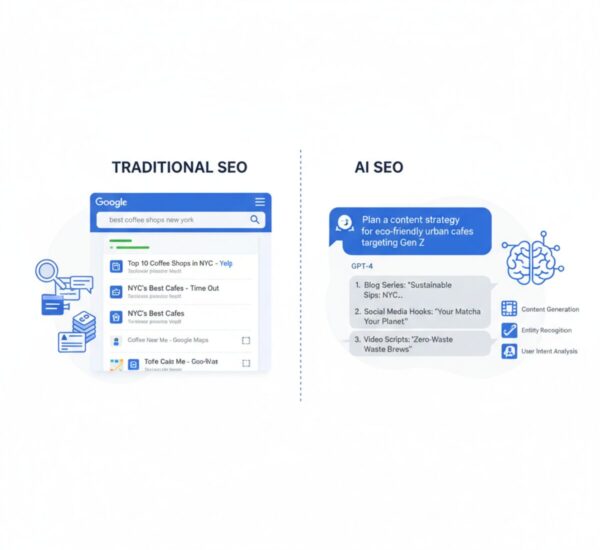
Google ranks pages. ChatGPT recommends brands and solutions. Google optimization focuses on keywords and backlinks. ChatGPT optimization focuses on entity authority, brand mentions, and answer-ready content. The best strategy does both simultaneously.
How do I track my brand’s visibility in ChatGPT?
Manually query ChatGPT with relevant prompts and document responses. Use tools like Perplexity (which cites sources) to understand which content AI systems reference. Track brand mentions across the web using tools like Brand24, Mention, or Google Alerts.
Need help getting your brand recommended by AI search engines? Be The Answer specializes in Generative Engine Optimization (GEO) — the science of making AI recommend your brand. We’ve helped brands achieve AI visibility in as little as 60 days.