Learn more in our getting cited by AI platforms.
Complete Guide to Generative Engine Optimization (GEO) in 2025
Search is undergoing its biggest transformation since Google replaced the phone book. ChatGPT, Google AI Overviews, Perplexity, and Microsoft Copilot are fundamentally changing how people find information—and how businesses get found. Welcome to the era of Generative Engine Optimization (GEO).
At Be The Answer, we’ve been at the forefront of this shift since day one. This guide breaks down everything you need to know about GEO: what it is, how it differs from traditional SEO, the strategies that actually work, and how to measure success in this new landscape.
Table of Contents
- What Is Generative Engine Optimization (GEO)?
- GEO vs. Traditional SEO: Key Differences
- Why GEO Matters Right Now
- The GEO Framework: How AI Engines Choose Sources
- Proven GEO Strategies for 2025
- Essential GEO Tools and Platforms
- Measuring GEO Success
- The Future of GEO
- Frequently Asked Questions
What Is Generative Engine Optimization (GEO)?
Generative Engine Optimization is the practice of optimizing your content to be discovered, cited, and recommended by AI-powered search engines and generative platforms. While traditional SEO focuses on ranking in a list of blue links, GEO focuses on becoming the source that AI models pull from when generating answers.
The term was formalized in a landmark 2023 research paper from Georgia Tech, Princeton, and IIT Delhi researchers. Their study found that specific GEO techniques—particularly adding statistics and authoritative citations—could improve content visibility in generative engine responses by up to 41%.
Think of it this way: in traditional search, you optimize to rank on page one. In generative search, you optimize to be the answer—to be the source an AI cites when a user asks a question. That’s not just our company name; it’s the entire paradigm shift.
Generative Engines: What Are They?
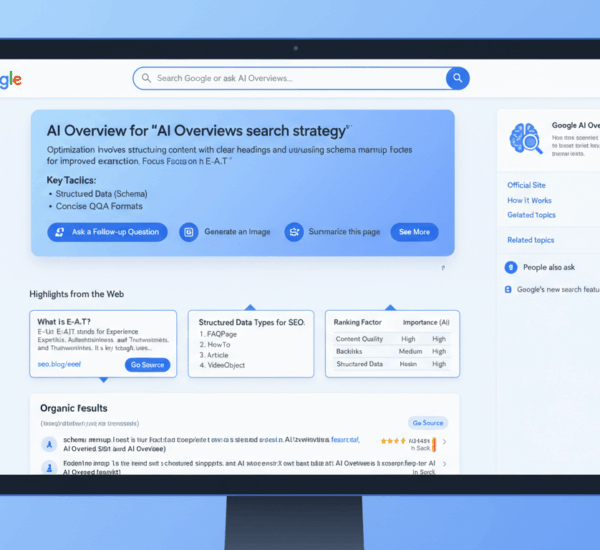
Generative engines are AI-powered platforms that synthesize information from multiple sources and deliver a single, conversational answer instead of a list of links. The major ones include:
- Google AI Overviews — AI-generated summaries appearing at the top of Google Search results
- ChatGPT with browsing — OpenAI’s conversational search experience
- Perplexity AI — A dedicated AI answer engine with inline citations
- Microsoft Copilot — Bing-integrated AI search and chat
- Google Gemini — Google’s AI assistant with real-time web access
Each of these platforms pulls content from the web, processes it through large language models (LLMs), and generates synthesized responses. Your goal with GEO is to ensure your content is selected, cited, and surfaced in those responses.
GEO vs. Traditional SEO: Key Differences
GEO doesn’t replace traditional SEO—it extends it. But the differences in approach are significant:
The Ranking Model
Traditional SEO competes for positions 1–10 on a search results page. GEO competes for citation slots inside an AI-generated answer. There’s no “page two” in generative search—you’re either cited or you’re invisible.
Content Format
SEO rewards keyword-optimized pages with strong backlink profiles. GEO rewards content that is structured, factual, and easy for machines to parse. AI models favor content with clear definitions, supporting data, organized headings, and authoritative sourcing.
User Interaction
In traditional search, the user clicks through to your website. In generative search, the AI may consume and synthesize your content without the user ever visiting your page. This means brand mentions and citations within AI answers become a new form of visibility—even without a direct click.
Success Metrics
SEO tracks rankings, click-through rates, and organic sessions. GEO tracks citation frequency, brand mentions in AI responses, AI-referred traffic, and share of voice across generative platforms.
Why GEO Matters Right Now
The data tells a compelling story about why businesses can no longer ignore GEO:
- AI-referred traffic to websites jumped 527% in the first half of 2025, according to industry analyses—an exponential growth curve that shows no signs of slowing.
- Google AI Overviews reached over 1.5 billion monthly users by Q1 2025, meaning AI-generated summaries are now a mainstream search experience.
- Zero-click searches account for 50–60% of queries in many categories, with AI summaries reducing traditional organic click-through rates by an estimated 15–25%.
- 56% of marketers are already using generative AI in their SEO workflows, with 86% of enterprise SEO teams having integrated some form of AI.
- Early GEO adopters report that optimized content is discovered up to 10× faster by generative engines compared to relying on organic SEO alone.
The bottom line: the businesses that adapt to GEO now will capture citation share while competition is still relatively low. Those who wait will face a much steeper climb.
The GEO Framework: How AI Engines Choose Sources
Understanding how generative engines select and cite sources is the foundation of any effective GEO strategy. While each platform has its own nuances, they share common principles:
1. Retrieval
Generative engines first retrieve potentially relevant content from their index (or via real-time web search). This stage still relies heavily on traditional SEO signals—crawlability, domain authority, topical relevance, and freshness. If your content isn’t indexed and ranking reasonably well, it won’t enter the AI’s consideration set.
2. Evaluation
Retrieved content is evaluated for quality, authority, and relevance. AI models assess factors like:
- Factual accuracy — Does the content include verifiable data, statistics, and citations?
- Author credibility — Is there clear E-E-A-T (Experience, Expertise, Authoritativeness, Trustworthiness)?
- Content structure — Is information organized logically with clear headings and definitions?
- Recency — Is the content current and regularly updated?
3. Synthesis
The AI model synthesizes information from multiple sources into a coherent response. Content that provides clear, concise, well-supported answers is more likely to be directly quoted or paraphrased—and therefore cited.
4. Citation
Most generative engines include source citations. Getting cited depends on providing unique value—original data, expert insights, or definitive explanations that the AI can attribute to a specific source.
For more on this topic, read our technical AI SEO implementation guide.
Proven GEO Strategies for 2025
Based on the original GEO research and our experience at Be The Answer working with clients across industries, here are the GEO strategies delivering measurable results right now:
1. Lead with Statistics and Data
The original GEO research found that adding relevant statistics improved visibility in generative responses by up to 41%. AI models prefer content backed by concrete numbers because it signals authority and helps them generate more informative answers.
Action steps:
- Include specific data points, percentages, and research findings throughout your content
- Cite original sources for all statistics
- Create original research and surveys that only you can provide
- Update data regularly to maintain freshness
2. Add Authoritative Citations and Quotations
The same research showed that quotation addition improved subjective impression scores by 28%. Generative engines trust content that references recognized experts and institutions.
Action steps:
- Quote industry experts, academic research, and official sources
- Link to primary sources rather than secondary ones
- Include expert commentary and analysis alongside raw data
3. Structure Content for Machine Comprehension
AI models parse content programmatically. Clear structure isn’t just a UX benefit—it’s a GEO requirement.
Action steps: For more on this topic, read our AI search ranking factors.
- Use descriptive H2 and H3 headings that match common questions
- Write concise, direct definitions in the opening sentences of each section
- Use bullet points and numbered lists for multi-part answers
- Include a table of contents for long-form content
- Implement comprehensive schema markup (FAQ, HowTo, Article, Organization)
4. Implement Robust Schema Markup
Structured data helps AI engines understand your content’s context, authorship, and purpose. GEO-optimized pages treat schema as essential infrastructure, not an afterthought.
Action steps:
- Add
ArticleorTechArticleschema with author, date, and organization details - Implement
FAQPageschema for question-and-answer sections - Use
HowToschema for instructional content - Include
OrganizationandPersonschema to build entity recognition
5. Build Topical Authority Through Content Clusters
Generative engines favor sources that demonstrate deep expertise on a topic. A single blog post rarely wins citations—a comprehensive content ecosystem does.
Action steps:
- Create pillar pages covering core topics comprehensively
- Build supporting cluster content that addresses subtopics and related questions
- Interlink strategically to signal topical relationships
- Cover topics from multiple angles: definitions, strategies, tools, case studies, and FAQs
6. Optimize for Conversational and Long-Tail Queries
Users interact with generative engines conversationally. They ask complete questions rather than typing keyword fragments.
Action steps:
- Research and target natural-language questions your audience asks
- Provide direct, concise answers in the first 1–2 sentences of each section
- Use “People Also Ask” data and AI platform query patterns to guide content
- Write in a clear, authoritative voice that AI models can easily quote
7. Prioritize E-E-A-T Signals
Google’s E-E-A-T framework (Experience, Expertise, Authoritativeness, Trustworthiness) is even more critical for GEO. AI models are trained to prefer trustworthy, expert content.
Action steps:
- Publish author bios with verifiable credentials
- Include first-hand experience and original insights
- Earn mentions and citations from other authoritative sources
- Maintain transparency about methodologies and data sources
Essential GEO Tools and Platforms
The GEO tooling ecosystem is evolving rapidly. Here are the categories and platforms we recommend at Be The Answer:
AI Visibility Monitoring
- Otterly.ai — Tracks brand mentions and citations across ChatGPT, Perplexity, and Google AI Overviews
- Profound — Monitors AI search visibility and citation performance
- Peec AI — Analyzes how content appears in generative engine responses
Content Optimization for AI
- Frase — AI-powered content briefs and optimization with GEO-relevant features
- Surfer SEO — Content scoring with increasingly AI-aware optimization recommendations
- Clearscope — Semantic content optimization that supports AI discoverability
Schema and Structured Data
- Schema.org generators — For creating JSON-LD markup
- Google Rich Results Test — Validate your structured data implementation
- WordLift — AI-powered knowledge graph and schema automation
Analytics and Measurement
- Google Search Console — Track AI Overview appearances and click data
- Google Analytics 4 — Monitor AI-referred traffic segments
- Ahrefs / Semrush — Track traditional SEO signals that feed into GEO performance
Measuring GEO Success
One of the biggest challenges with GEO is measurement. Traditional SEO metrics don’t fully capture generative search performance. Here’s the measurement framework we use with our clients:
Primary GEO Metrics
- Citation frequency — How often your content is cited in AI-generated responses for target queries
- AI-referred traffic — Sessions originating from ChatGPT, Perplexity, Copilot, and other AI platforms (trackable via referral data in GA4)
- Brand mention volume — How frequently your brand appears in AI answers, even without a direct link
- Share of voice in AI responses — Your citation share relative to competitors for key topic areas
Supporting Metrics
- AI Overview inclusion rate — Percentage of target queries where your content appears in Google AI Overviews
- Content structure scores — Readability, schema completeness, and heading optimization ratings
- Topical authority indicators — Coverage breadth and depth across your content cluster
- E-E-A-T signals — Author authority metrics, backlink quality, and trust indicators
Building a GEO Dashboard
We recommend creating a dedicated GEO performance dashboard that combines:
- Weekly AI citation tracking across your priority queries
- Monthly AI-referred traffic trends segmented by platform
- Quarterly share-of-voice comparisons against key competitors
- Ongoing content audit scores measuring GEO readiness
The Future of GEO
Generative engine optimization is still in its early stages, but the trajectory is clear. Here’s what we expect to see:
Multimodal Optimization
As AI models become increasingly multimodal—processing text, images, video, and audio together—GEO will expand beyond written content. Optimizing images with descriptive alt text, creating video content with clear transcripts, and publishing structured audio content will all become part of the GEO playbook.
Real-Time Content Demands
Generative engines are moving toward real-time web access. Content freshness will become even more critical, and businesses that can publish authoritative, data-backed content quickly will gain a significant advantage in AI citations.
AI-Native Content Formats
We’ll see the emergence of content created specifically for AI consumption—structured knowledge bases, machine-readable FAQs, and API-accessible data sets that make it easier for generative engines to pull accurate information.
Convergence of SEO and GEO
Rather than remaining separate disciplines, SEO and GEO will fully converge. The best practitioners will optimize simultaneously for crawlers, traditional ranking algorithms, and generative AI models. The businesses that invest in this convergence now will have a compounding advantage.
📚 Continue Reading
New Attribution Models
As AI-driven discovery grows, new attribution standards will emerge. We expect industry-wide frameworks for tracking and valuing AI citations, similar to how view-through attribution evolved in digital advertising.
Frequently Asked Questions About GEO
What is GEO in SEO?
GEO (Generative Engine Optimization) is the practice of optimizing your digital content so it gets cited and referenced by AI-powered search engines like ChatGPT, Google AI Overviews, and Perplexity. It extends traditional SEO by focusing on how AI models select, synthesize, and cite sources when generating answers to user queries.
Does GEO replace traditional SEO?
No. GEO builds on top of traditional SEO. Your content still needs to be crawlable, indexed, and authoritative to be considered by generative engines. Think of GEO as an additional optimization layer that ensures your already well-optimized content is also favored by AI platforms.
How do I know if my content appears in AI answers?
You can manually test by searching your target queries in ChatGPT, Perplexity, and Google (for AI Overviews). For systematic tracking, tools like Otterly.ai and Profound monitor AI citations at scale. Google Search Console is also beginning to surface AI Overview performance data.
What type of content performs best for GEO?
Content that is well-structured, data-rich, clearly authored by credible experts, and directly answers specific questions. Research shows that adding statistics and authoritative citations are the two most effective GEO techniques, improving AI visibility by up to 41%.
How long does it take to see GEO results?
GEO results can appear faster than traditional SEO gains because AI engines re-crawl and re-index content frequently. Some clients see citation improvements within weeks of implementing structural and content optimizations. However, building sustained topical authority is a longer-term investment of 3–6 months.
Is GEO only relevant for Google?
No. GEO applies to all generative platforms—ChatGPT, Perplexity, Microsoft Copilot, Google Gemini, and emerging AI search tools. A strong GEO strategy improves your visibility across the entire AI search ecosystem, not just one platform.
Ready to Optimize for the AI Search Era?
Generative Engine Optimization isn’t a future trend—it’s happening right now. The businesses that adapt their content strategy for AI-powered search will capture the citation share and brand visibility that define success in this new landscape.
At Be The Answer, we specialize in helping businesses navigate the convergence of SEO and GEO. From AI visibility audits to full-scale content optimization, we help you become the source that generative engines trust and cite.
Get in touch to learn how our GEO strategies can transform your search visibility in 2025 and beyond.