AI SEO and traditional SEO share the same goal — making your brand visible when people search for information — but they work in fundamentally different ways. Understanding these differences is critical for any brand that wants to stay competitive as search evolves.
The Fundamental Difference
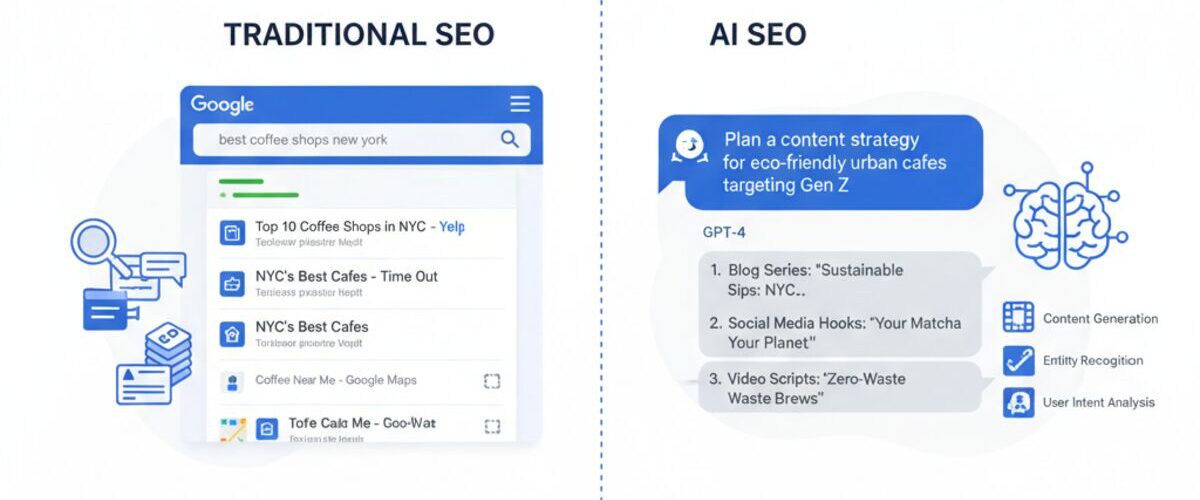
Traditional SEO optimizes web pages to rank in search engine results pages. You target keywords, build backlinks, optimize meta tags, and compete for positions 1 through 10 on Google.
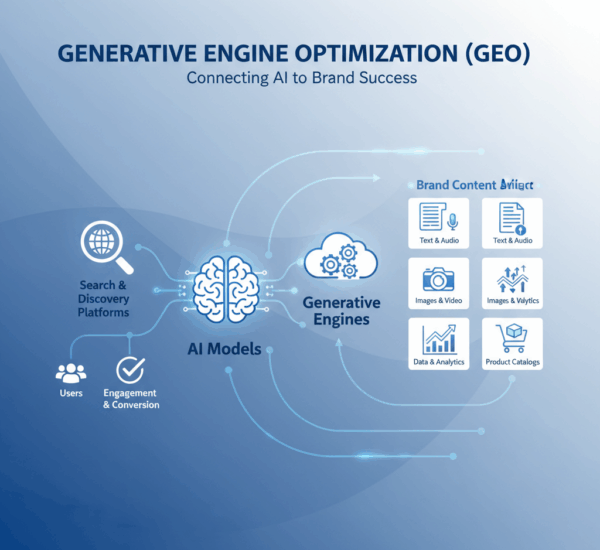
AI SEO (also called Generative Engine Optimization or GEO) optimizes your brand’s entire online presence so that AI-powered tools like ChatGPT, Perplexity, Google Gemini, and Claude recommend your brand in their conversational responses.
The difference is profound. Traditional SEO gets you a link on a results page. AI SEO gets you a direct recommendation in a conversation.
How Search Behavior Is Changing
In traditional search, a user types “best CRM software” into Google and browses through 10 results, reading titles and descriptions to decide which link to click. They might visit 3-4 pages before making a decision.
In AI search, a user asks ChatGPT “What CRM should I use for a 50-person sales team?” and gets a direct, personalized recommendation with reasoning. There are no 10 blue links — there’s one answer. If your brand is that answer, you win. If it’s not, the user may never discover you.
This is why AI SEO matters. The window between “searching” and “deciding” is collapsing, and brands need to be present in that compressed moment.
Ranking Factors: Traditional SEO vs AI SEO
Traditional SEO ranking factors are well-documented: keyword relevance, backlink quality and quantity, page speed, mobile-friendliness, domain authority, content freshness, user engagement signals, and technical SEO fundamentals like crawlability and structured data.
AI SEO ranking factors are different and still evolving. The key signals include brand entity strength (how well AI models understand what your brand is and does), cross-platform mention frequency (how often your brand appears across authoritative sources), content extractability (how easily AI can parse and quote your content), sentiment consistency (whether mentions are consistently positive), topical authority (depth and breadth of expertise demonstrated), and structured data quality (schema markup that helps AI understand context).
Content Strategy Differences
For traditional SEO, you write content targeting specific keywords with specific search volumes. You optimize title tags, meta descriptions, headers, and internal links. Success means ranking on page one for your target keyword.
For AI SEO, you create content designed to be cited and referenced by AI models. This means writing definitive, comprehensive answers to questions in your domain. Using clear, factual language that AI can confidently extract and paraphrase. Building content clusters that demonstrate deep topical expertise. Including specific data points, comparisons, and actionable recommendations that AI models prefer to cite.
The best approach is creating content that works for both. Well-structured, authoritative content that answers real questions will rank in Google AND get cited by AI.
Link Building vs Brand Mention Building
Traditional SEO relies heavily on backlinks — other websites linking to your pages as a signal of trust and authority.
AI SEO relies on brand mentions — your brand being discussed, reviewed, and referenced across the web, even without direct links. AI models don’t count backlinks. They analyze the frequency, context, and sentiment of brand mentions across their training data and live web access.
This doesn’t mean backlinks don’t matter for AI SEO. They still drive traditional search traffic and indirectly contribute to brand authority. But the emphasis shifts from “get links” to “get mentioned positively on authoritative platforms.”
Technical Requirements
Both approaches require solid technical foundations, but the emphasis differs.
Traditional SEO technical requirements focus on page speed, mobile responsiveness, crawlability, XML sitemaps, canonical tags, robots.txt, HTTPS, and Core Web Vitals.
AI SEO adds emphasis on structured data (Organization, Product, FAQ, HowTo schema), clean content architecture that AI can parse, machine-readable content formats, API-friendly data structures like JSON-LD, and clear entity markup that helps AI identify your brand.
Measurement and Analytics
Traditional SEO is measured through keyword rankings, organic traffic, click-through rates, bounce rates, and conversions from organic search.
AI SEO measurement is less mature but involves tracking brand mentions across AI platforms (ChatGPT, Gemini, Perplexity, Claude), monitoring which queries trigger your brand recommendation, analyzing AI referral traffic and its conversion rates, and tracking brand sentiment in AI-generated responses.
Which Should You Prioritize?
Both. Traditional SEO and AI SEO are complementary, not competing strategies. A strong traditional SEO foundation supports AI SEO success — Google-ranked pages get more exposure, which generates more brand mentions, which improves AI recommendations.
The smartest approach is to build your SEO strategy for both simultaneously. Create authoritative, well-structured content. Build brand visibility across authoritative platforms. Implement comprehensive structured data. Monitor performance in both traditional and AI search channels.
Brands that master both channels will have an insurmountable competitive advantage as AI search continues to grow.
Be The Answer helps brands optimize for both traditional and AI search. Our GEO strategies ensure your brand gets recommended by ChatGPT, Gemini, Perplexity, and other AI platforms while maintaining strong Google rankings.